
09Jul

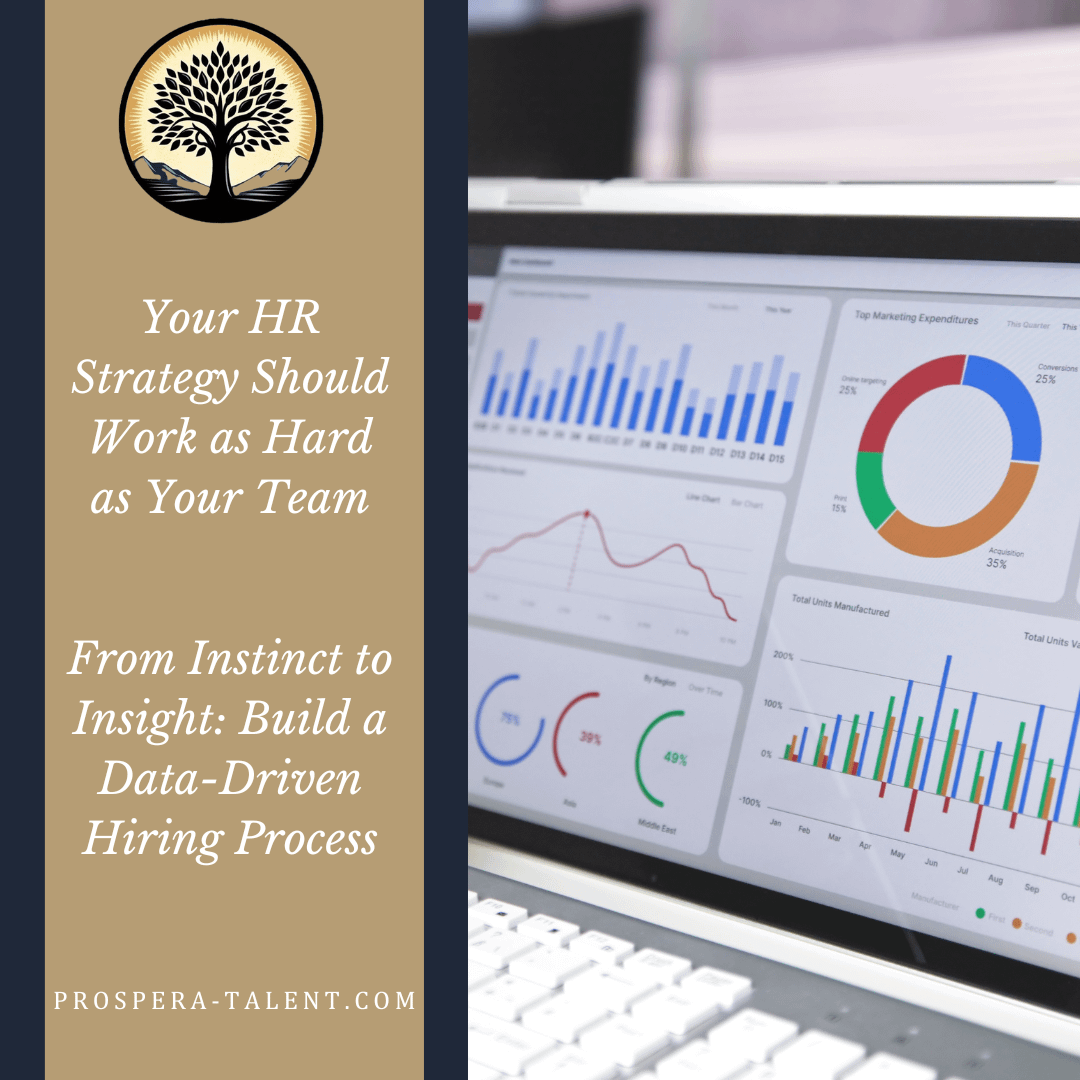
HR Metrics: Why They Matter and How They Drive Business Results

In today’s data-driven world, HR is no longer just about people — it’s about performance, strategy, and measurable impact.
HR metrics give companies the tools to understand how well their workforce is performing, how effective their hiring processes are, and where they need to improve to stay competitive.

At Prospera Talent Agency, we believe that great hiring starts with great data. That’s why we work with our clients to implement HR strategies backed by meaningful, actionable metrics.

✅ Why HR Metrics Matter

HR metrics help organizations:

  • Diagnose weak points in recruitment, onboarding, retention, and performance
  • Make data-driven decisions (not guesswork)
  • Optimize hiring costs and timelines
  • Justify HR initiatives to leadership
  • Predict talent needs and workforce trends
  • Strengthen employer branding and employee experience

 Key HR Metrics and How to Use Them

1. Employee Turnover Rate

Formula:
(Number of employees who left ÷ Average total employees) × 100%

 What it tells you: Overall retention and stability. High turnover may signal poor onboarding, lack of engagement, or misalignment with company culture.

 Use it to:

  • Separate voluntary vs. involuntary turnover
  • Analyze trends by department or team
  • Trigger exit interviews and feedback loops

2. Time to Hire

Formula:
Date of job acceptance – Date job was posted

 What it tells you: The speed and efficiency of your recruitment process.

 Use it to:

  • Identify bottlenecks in the hiring workflow
  • Benchmark performance by role or recruiter
  • Improve candidate experience

3. Cost per Hire

Formula:
(Total recruitment cost ÷ Number of hires)

 Includes: job ads, recruiter salaries, agency fees, onboarding, software, etc.

 Use it to:

  • Measure ROI of hiring channels
  • Optimize recruitment budget
  • Compare internal vs. external hiring costs

4. New Hire Retention Rate

Formula:
(Number of new hires still employed after 3–6 months ÷ Total new hires) × 100%

 What it tells you: The quality of hire and effectiveness of onboarding.

 Use it to:

  • Evaluate recruitment sources and selection process
  • Improve onboarding programs
  • Reduce early attrition

5. Employee Engagement Score

💬 Usually measured via anonymous surveys or eNPS (employee net promoter score).

 Use it to:

  • Track how motivated and committed employees feel
  • Identify risks of burnout or disengagement
  • Align internal culture with business goals

6. Internal Mobility Rate

Formula:
(Number of internal moves ÷ Total open roles) × 100%

 What it tells you: Career growth opportunities and employee development inside the organization.

Use it to:

  • Promote career pathing
  • Build succession plans
  • Improve retention through internal promotion

Where to Track Your Metrics

  • ATS (Applicant Tracking Systems) – e.g., Workable, Greenhouse, Recruitee
  • HRIS (HR Information Systems) – e.g., BambooHR, PeopleForce
  • Google Sheets / Excel – for early-stage tracking
  • Pulse Surveys – via Google Forms, Officevibe, CultureAmp
  • CRM/ERP tools – for tying HR data to performance or sales

How to Implement HR Metrics in Your Company

  1. Define your business goals and match relevant metrics
  2. Automate data collection wherever possible
  3. Visualize metrics with dashboards for clarity
  4. Benchmark against industry standards
  5. Share insights with leadership to drive strategic decisions
  6. Adjust regularly — metrics should evolve with your company

💡 Final Thoughts

HR metrics are not just “nice to have” — they’re essential for building a smarter, more resilient, and more effective workforce.
At Prospera Talent Agency, we help companies go beyond filling positions — we support them in creating sustainable hiring strategies built on data, insight, and long-term value.

📩 Want to know which metrics your business should be tracking?
Let’s talk — we’d be happy to guide you.

11Feb

The Job Market in Florida: Trends, Statistics, and Opportunities for Candidates and Employers

The job market in Florida has undergone significant changes in recent years. The COVID-19 pandemic, economic recovery, and shifts in both worker and employer needs have dramatically impacted the labor market. In this article, we will review key statistics about unemployment, active job seekers, and the trend toward job switching, and provide recommendations for both employers and candidates.

10Feb

Why HR Specialists Need Boolean Search and How to Use It

In recruitment, finding the right candidates is a key task for HR professionals. But how can this process be made as efficient as possible? One of the most powerful tools for talent acquisition is Boolean Search. It significantly reduces search time and helps find the most relevant candidates. Let’s explore why Boolean Search is essential for HR and how to use it effectively.

05Jan

Small and Medium Businesses in Florida: Key Statistics for 2024

Small and medium-sized businesses (SMBs) are not just the backbone of Florida’s economy; they are a powerhouse of innovation, opportunity, and local growth. Florida’s entrepreneurial spirit is alive and thriving, as SMBs drive job creation, technological advancements, and economic diversity. According to the U.S. Small Business Administration (SBA), Florida remains one of the leading states for small business activity. Let’s dive deeper into the role of SMBs in the Sunshine State.

04Jan

Top 10 Most In-Demand Professions in Florida in 2025

Florida’s dynamic economy continues to attract businesses, professionals, and investors. With its unique demographics and rapid development, the state has seen a surge in demand for specific professions. At Prospera Talent Agency, we’ve identified the top 10 careers expected to dominate the job market in Florida in 2025. Let’s explore these professions in detail.

01Dec

Myths About Working with Recruitment Agencies: Debunking Common Misconceptions

Recruitment agencies play a vital role in today’s business world, helping companies find the right talent while saving time and resources. However, there are many myths surrounding recruitment agencies that prevent businesses from fully leveraging their benefits. In this article, we’ll break down some of the most common misconceptions and explain why partnering with a recruitment agency can be a smart and strategic choice for your business.

24Nov

IT Recruitment: Features, Challenges, Pros, and Cons

The IT industry has become one of the most dynamic and rapidly growing sectors in recent years. Recruiting in IT requires not only a deep understanding of the labor market but also the ability to navigate unique challenges. In this blog, we’ll explore the key features, challenges, and the pros and cons of working in IT recruitment.


Features of IT Recruitment

  1. High Demand for Talent
    IT professionals, especially those with niche skills, are in demand globally. Companies compete fiercely for the best candidates, offering competitive salaries, bonuses, and flexible work arrangements.
  2. Technical Expertise
    Recruiters must understand modern technologies, programming languages, frameworks, and tools to accurately assess a candidate’s qualifications.
  3. Remote and Hybrid Work Models
    Many IT teams work remotely, which expands the talent pool but also introduces challenges in assessing candidates’ ability to thrive in virtual environments.
  4. Company Culture Fit
    Beyond technical skills, finding candidates who align with the company’s culture and values is crucial. IT professionals often prioritize a collaborative work environment, transparent processes, and opportunities for growth.

Challenges in IT Recruitment

  1. Shortage of Qualified Professionals
    There is a significant talent gap in areas such as software development, cybersecurity, and data analytics. Companies must explore creative ways to attract top talent, including investing in training programs.
  2. Passive Candidates
    Many experienced IT professionals are not actively job hunting. Attracting them requires proactive sourcing, creating compelling job offers, and building a strong employer brand.
  3. Rapidly Changing Technologies
    Technology evolves quickly, and skills that are relevant today may become obsolete tomorrow. Recruiters need to stay informed about industry trends to find candidates with up-to-date expertise.
  4. Lengthy Hiring Processes
    IT recruitment often involves multiple stages, including technical assessments, team interviews, and skill evaluations. Prolonged hiring timelines can deter candidates who receive faster offers from competitors.

Advantages of IT Recruitment

  1. Access to a Global Talent Pool
    Remote work enables companies to find professionals worldwide, making it easier to fill positions with rare skill sets.
  2. Innovation and Growth Opportunities
    Collaborating with IT companies allows recruiters to be part of cutting-edge projects and technological advancements, which can be inspiring and rewarding.
  3. Long-Term Partnerships
    Successful IT recruitment often leads to strong, long-term relationships with clients who value high-quality and personalized hiring services.

Disadvantages of IT Recruitment

  1. High-Pressure Environment
    Tight deadlines, complex requirements, and fierce competition for candidates can create a stressful environment for recruiters.
  2. Difficulty in Evaluating Skills
    Assessing technical expertise requires a solid understanding of technologies, and misjudging a candidate’s abilities can lead to costly hiring mistakes.
  3. Constant Market Changes
    The IT market is dynamic, requiring recruiters to continuously learn and adapt to new tools, trends, and expectations.

Why IT Recruitment Matters

The IT sector is the backbone of modern business. Companies rely on skilled professionals to develop products, ensure cybersecurity, and automate processes. Effective recruitment helps find not just employees but team members who share the company’s mission and values, driving its growth and success.


Conclusion

IT recruitment is a challenging yet rewarding field that demands flexibility, deep knowledge, and a commitment to continuous learning. It offers unique opportunities to work with innovative companies and build careers for candidates who shape the future of technology.

At Prospera Talent Agency, we are dedicated to helping businesses connect with top IT professionals who not only meet technical requirements but also align with the company’s culture and vision.

Let’s build successful teams together!

27Oct

Best Services for Small Businesses: Why Small is Big Today

In a rapidly evolving market, small businesses have become powerful engines of innovation and growth. While large corporations have resources and market dominance, small businesses possess unique advantages that allow them to thrive in today’s dynamic environment. Let’s explore why being small is a big opportunity for businesses and the services that can help them succeed.