

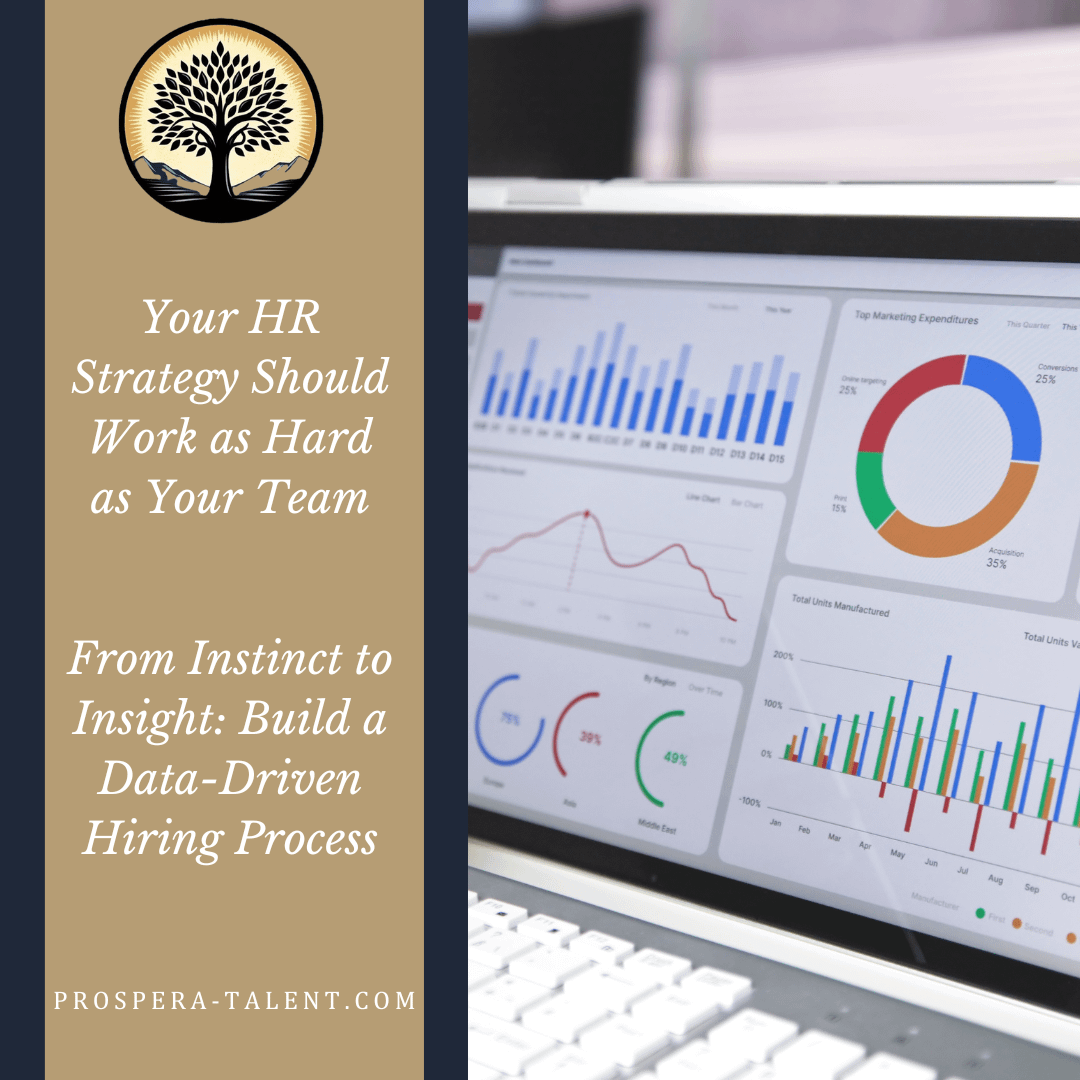
In today’s data-driven world, HR is no longer just about people — it’s about performance, strategy, and measurable impact.
HR metrics give companies the tools to understand how well their workforce is performing, how effective their hiring processes are, and where they need to improve to stay competitive.
At Prospera Talent Agency, we believe that great hiring starts with great data. That’s why we work with our clients to implement HR strategies backed by meaningful, actionable metrics.
✅ Why HR Metrics Matter
HR metrics help organizations:
- Diagnose weak points in recruitment, onboarding, retention, and performance
- Make data-driven decisions (not guesswork)
- Optimize hiring costs and timelines
- Justify HR initiatives to leadership
- Predict talent needs and workforce trends
- Strengthen employer branding and employee experience
Key HR Metrics and How to Use Them
1. Employee Turnover Rate
Formula:
(Number of employees who left ÷ Average total employees) × 100%
What it tells you: Overall retention and stability. High turnover may signal poor onboarding, lack of engagement, or misalignment with company culture.
Use it to:
- Separate voluntary vs. involuntary turnover
- Analyze trends by department or team
- Trigger exit interviews and feedback loops
2. Time to Hire
Formula:
Date of job acceptance – Date job was posted
What it tells you: The speed and efficiency of your recruitment process.
Use it to:
- Identify bottlenecks in the hiring workflow
- Benchmark performance by role or recruiter
- Improve candidate experience
3. Cost per Hire
Formula:
(Total recruitment cost ÷ Number of hires)
Includes: job ads, recruiter salaries, agency fees, onboarding, software, etc.
Use it to:
- Measure ROI of hiring channels
- Optimize recruitment budget
- Compare internal vs. external hiring costs
4. New Hire Retention Rate
Formula:
(Number of new hires still employed after 3–6 months ÷ Total new hires) × 100%
What it tells you: The quality of hire and effectiveness of onboarding.
Use it to:
- Evaluate recruitment sources and selection process
- Improve onboarding programs
- Reduce early attrition
5. Employee Engagement Score
💬 Usually measured via anonymous surveys or eNPS (employee net promoter score).
Use it to:
- Track how motivated and committed employees feel
- Identify risks of burnout or disengagement
- Align internal culture with business goals
6. Internal Mobility Rate
Formula:
(Number of internal moves ÷ Total open roles) × 100%
What it tells you: Career growth opportunities and employee development inside the organization.
Use it to:
- Promote career pathing
- Build succession plans
- Improve retention through internal promotion
Where to Track Your Metrics
- ATS (Applicant Tracking Systems) – e.g., Workable, Greenhouse, Recruitee
- HRIS (HR Information Systems) – e.g., BambooHR, PeopleForce
- Google Sheets / Excel – for early-stage tracking
- Pulse Surveys – via Google Forms, Officevibe, CultureAmp
- CRM/ERP tools – for tying HR data to performance or sales
How to Implement HR Metrics in Your Company
- Define your business goals and match relevant metrics
- Automate data collection wherever possible
- Visualize metrics with dashboards for clarity
- Benchmark against industry standards
- Share insights with leadership to drive strategic decisions
- Adjust regularly — metrics should evolve with your company
💡 Final Thoughts
HR metrics are not just “nice to have” — they’re essential for building a smarter, more resilient, and more effective workforce.
At Prospera Talent Agency, we help companies go beyond filling positions — we support them in creating sustainable hiring strategies built on data, insight, and long-term value.
📩 Want to know which metrics your business should be tracking?
Let’s talk — we’d be happy to guide you.


