Many leaders believe they know how to conduct interviews.
After all, they understand their business, know the role requirements, and work with people every day.
But effective interviewing is a skill.
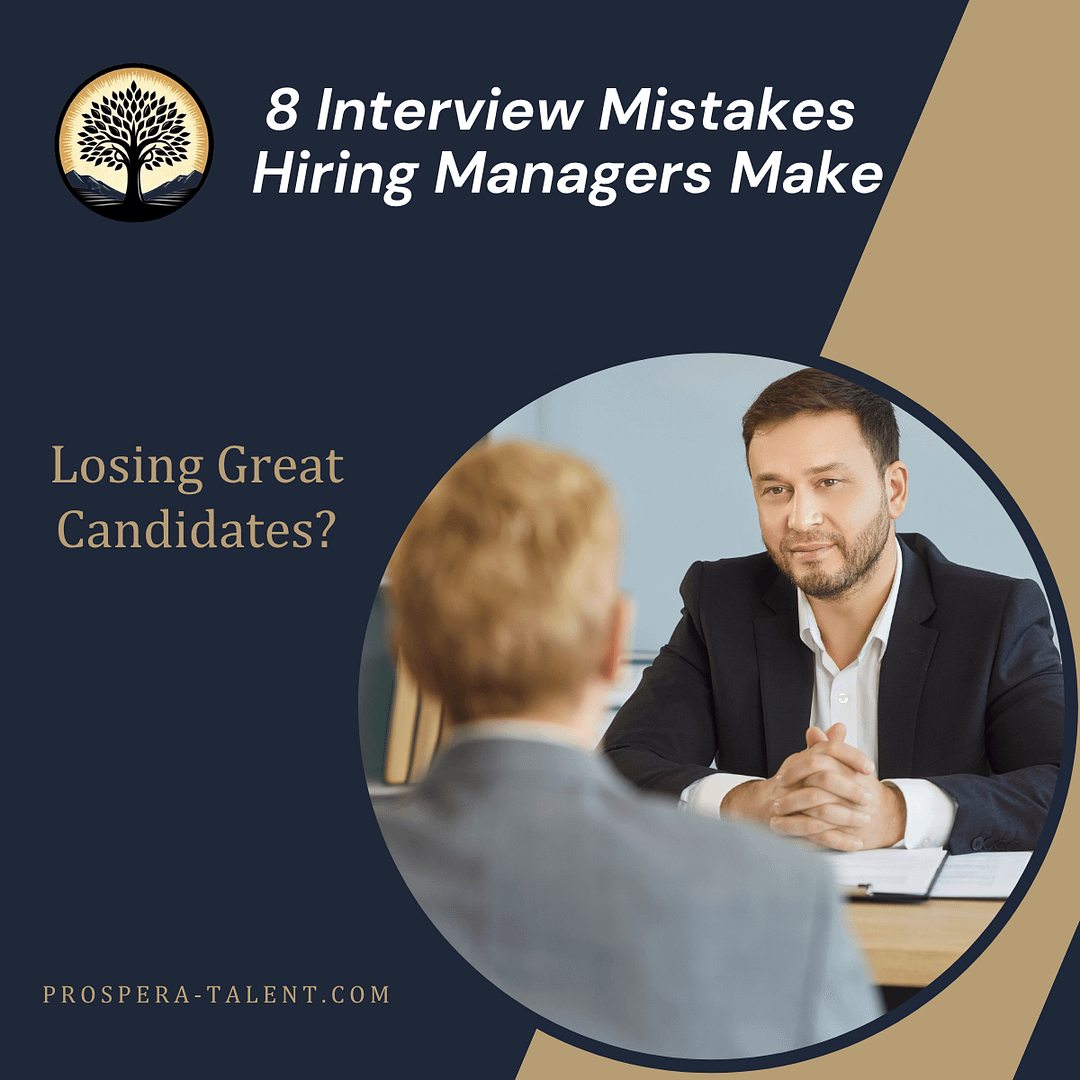
Mistakes during the interview process can lead to poor hiring decisions, high turnover, missed talent, and costly re-hiring efforts.
Here are eight common mistakes I frequently observe.
1. Relying Too Much on First Impressions
First impressions matter.
But they do not always reflect a candidate’s true potential.
Some people interview exceptionally well but struggle in the role.
Others may be nervous at the beginning and later become top performers.
Strong hiring decisions require evidence, not only intuition.
2. Talking More Than Listening
Sometimes interviews turn into company presentations.
The hiring manager spends most of the time talking about the business, while the candidate has little opportunity to share meaningful information.
A good interview should be a conversation, not a monologue.
3. Evaluating Only Experience
Experience matters.
However, experience alone does not guarantee success.
It is equally important to assess:
✔ Motivation
✔ Adaptability
✔ Communication skills
✔ Work style
✔ Team fit
In many cases, these factors determine long-term success more than technical skills alone.
4. Not Asking Behavioral Questions
Behavioral questions often reveal more than discussing a CV.
For example:
• Tell me about a difficult situation you successfully handled.
• Describe a conflict you experienced at work and how you resolved it.
• Tell me about a challenging client interaction.
Past behavior remains one of the strongest predictors of future behavior.
5. Looking for the “Perfect” Candidate
Many hiring processes become unnecessarily long because companies search for someone who meets 100% of the requirements.
In reality, strong teams are often built by hiring people with potential, learning agility, and the ability to grow.
6. Ignoring Candidate Experience
Interviews are not only about evaluating candidates.
Candidates are evaluating your company too.
Poor communication, lack of feedback, unprepared interviewers, or excessive delays can damage your employer brand and reduce your ability to attract top talent.
7. Making Decisions Without Structure
When interviews are conducted without clear evaluation criteria, decisions often become subjective.
Structured interviews help compare candidates more objectively and reduce hiring bias.
8. Asking Questions That Do Not Help Evaluate the Candidate
Sometimes interviewers ask questions based on personal curiosity rather than job relevance.
Examples include:
❌ Are you married?
❌ Do you plan to have children?
❌ What religion do you follow?
❌ Who do you vote for?
❌ How much does your spouse earn?
Even when asked without bad intentions, these questions can make candidates uncomfortable and shift the focus away from professional qualifications.
Instead, consider asking:
✔ What attracted you to this role?
✔ Which project are you most proud of?
✔ What type of work environment helps you perform at your best?
✔ What motivates you professionally?
✔ What is important to you when choosing a new employer?
Good interviews focus on skills, motivation, potential, and long-term fit.
Final Thought
An effective interview is not about finding the perfect answer.
It is about understanding:
— whether the candidate can perform the role
— whether they fit the team
— whether they align with company values
— and whether they can grow with the business
Strong hiring decisions are rarely accidental.
They are usually the result of preparation, structure, and a thoughtful approach to evaluating talent.
Prospera Talent Agency
Helping companies make stronger hiring decisions and build teams for long-term growth.
#Recruitment #Hiring #Interviewing #Leadership #TalentAcquisition #HiringManagers #EmployerBranding #HRStrategy #Management #PeopleManagement #BusinessGrowth #TalentManagement #CandidateExperience #Recruiter #ProsperaTalentAgency