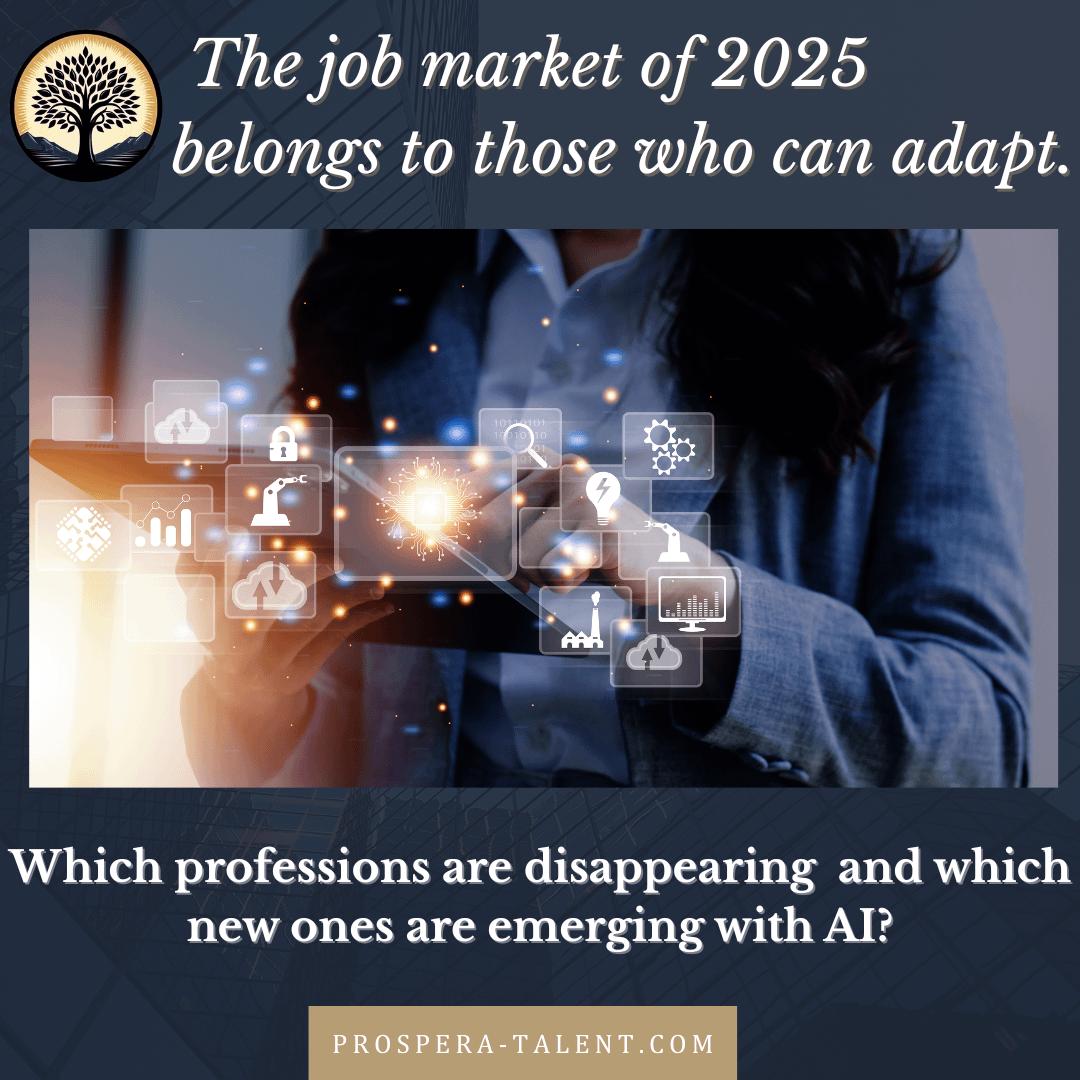
Artificial Intelligence (AI) is no longer a buzzword. It has become a defining force behind today’s economy, business models, and workforce transformation.
In 2025, AI’s influence is visible across every sector — from finance and logistics to education and healthcare.
Companies are rethinking workflows, automating repetitive processes, and integrating AI into daily operations. This shift is transforming how we work and what skills are valued.
AI doesn’t simply replace humans — it redefines the structure of work itself, creating new forms of collaboration between people and technology.
Roles at Risk: Professions Likely to Disappear or Shrink
Job disappearance is a gradual process, but automation is already reducing demand for certain roles built on routine, repetitive tasks.
Among the most affected:
1. Data Entry Clerks and Archivists
AI systems now recognize text, classify, sort, and analyze documents far faster and more accurately than humans. OCR, RPA, and machine learning technologies automate the entire document cycle — from scanning to archiving.
2. Call Center Operators (First Line Support)
Voice assistants and NLP (Natural Language Processing) technologies can handle thousands of customer inquiries simultaneously, detecting intent and providing accurate responses 24/7.
Human operators remain relevant only for complex or emotionally sensitive cases.
3. Cashiers and Point-of-Sale Operators
Self-checkout systems, mobile payments, and integrated CRM platforms are transforming retail. The human role is shifting toward customer support, personalized service, and operational supervision.
4. Basic Analysts Without Technical Skills
Modern BI tools and AI platforms can instantly generate reports and visualizations.
An analyst’s value now lies not in data gathering, but in interpreting insights and guiding strategic decisions.
5. General Translators
Generative language models such as ChatGPT, Gemini, or DeepL now produce high-quality, context-aware translations.
Only specialized niches remain — legal, medical, literary, or culturally adapted translation where nuance and tone matter.
Emerging Professions and New Growth Areas
As traditional roles fade, a new ecosystem of professions is growing — built around adaptability, critical thinking, creativity, and human-AI collaboration.
1. AI Trainers and Model Curators
AI doesn’t learn by itself. It must be trained, corrected, and contextualized.
AI trainers prepare datasets, evaluate model responses, apply ethical filters, and ensure that algorithms align with business goals and human values.
2. AI Business Partners (AI Strategy Manager, AI-driven Talent Partner)
These are hybrid professionals bridging business, analytics, HR, and technology.
They develop AI adoption strategies, analyze operational processes, and help organizations use AI not as a trend, but as a growth accelerator.
3. AI Ethics and Safety Specialists
AI can make biased or opaque decisions.
Ethics experts assess risks, design transparency protocols, and implement responsible AI principles that ensure fairness, accountability, and trust.
4. T-shaped Professionals at the Intersection of Disciplines
Companies increasingly seek multi-skilled talent combining expertise across domains:
- a marketer skilled in prompt engineering,
- a recruiter fluent in People Analytics and AI sourcing,
- a designer experienced with tools like Midjourney or Runway.
Such professionals become key drivers of digital transformation.
5. Data Interpreters and Digital Facilitators
These experts “translate” complex AI insights into actionable strategies for HR, marketing, operations, or finance departments.
They serve as connectors between data and decision-making.
The Core Skill for the AI Era: Adaptability and Continuous Learning
AI doesn’t take jobs — it changes how we perform them.
The most resilient professionals are those who:
- learn new tools and systems quickly;
- think critically and verify machine-generated results;
- use technology as a partner, not a competitor;
- strengthen soft skills like communication, empathy, facilitation, and collaboration.
Traditional Roles Are Evolving, Not Disappearing
Most jobs will not vanish — they will transform.
The human role remains essential but will increasingly focus on meaning, creativity, and strategic insight rather than repetition.
| Profession | How It’s Changing Under AI Influence |
| Recruiter | Less manual sourcing, more evaluation and strategic advisory |
| HR Generalist | Greater focus on analytics, engagement, and retention |
| Financial Analyst | Shift toward scenario modeling and data interpretation |
| Project Manager | More emphasis on risk management and cross-team facilitation |
| Marketer | Integration of generative content, A/B testing, and data-driven strategy |
The Bottom Line
AI is not an enemy of human work — it’s a catalyst for change.
It frees people from repetitive tasks but raises expectations for creativity, flexibility, and emotional intelligence.
Companies that invest in reskilling, learning ecosystems, and adaptive hiring will gain a competitive edge.
And professionals who know how to collaborate with AI — not compete with it — will be the most in-demand talent of the decade.
📩 If your company is navigating digital transformation and needs professionals capable of working effectively alongside AI,
Prospera Talent Agency can help you find and develop these future-ready specialists.
#FutureOfWork #AIinBusiness #EmergingJobs #ArtificialIntelligence #Reskilling #HR2025 #WorkforceTrends #ProsperaTalent #DigitalTransformation #SkillsOfTheFuture