

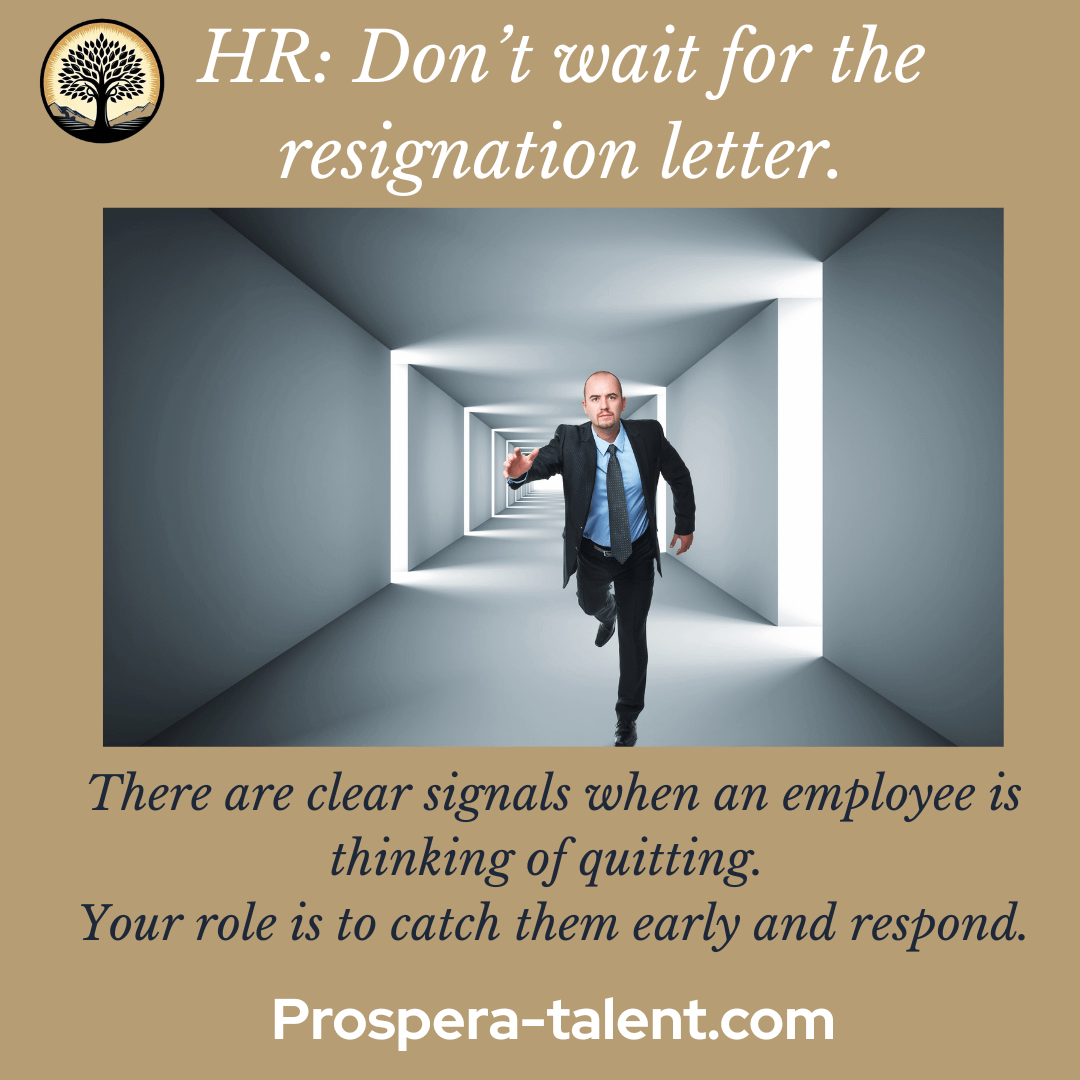
Employee turnover can be costly — not just financially, but in terms of time, lost knowledge, and team morale. When a high-performing team member suddenly resigns, it often feels like a shock. But in most cases, there are clear warning signs well before the resignation letter lands on your desk.
In this post, Prospera Talent Agency shares how to spot early indicators of potential resignation — and what HR professionals can do to retain talent and reduce the risk of unexpected departures.
10 Early Warning Signs an Employee Is Thinking About Leaving
1. Declining Engagement and Initiative
A previously enthusiastic employee is now silent during meetings, avoids contributing new ideas, and takes a back seat in team discussions. That’s often a red flag.
Example: Once proactive and full of suggestions, they now do only what’s strictly required — nothing more.
2. Frequent Time Off or Sudden Schedule Changes
When someone starts requesting random days off, arriving late, or suddenly needing flexible hours, they might be attending interviews elsewhere.
3. Mood Shifts or Emotional Withdrawal
Increased irritability, emotional detachment, or reduced social interaction can signal dissatisfaction or burnout.
4. Unusual LinkedIn Activity
Updated profiles, new connections with recruiters or competitors, or career-focused posts may indicate active job hunting.
Tip: Subscribing to your competitors’ company pages is a clear sign.
5. Drop in Performance or Quality of Work
Tasks are rushed, deadlines are missed, and attention to detail declines. This often means their mind is already elsewhere.
6. Lack of Long-Term Interest
Employees who stop asking about future projects, growth paths, or development opportunities may no longer envision a future with your company.
7. Disengagement from Company Culture
They skip team events, avoid watercooler talk, and stop participating in internal initiatives — signs they’re emotionally checked out.
8. Expressing Frustration or Feeling Undervalued
If someone says things like “I don’t feel heard,” or “No one notices my work,” that shouldn’t be brushed off — it’s a cry for recognition.
9. Becoming Secretive or Guarded
Closing windows when someone walks by, avoiding eye contact, or becoming vague about plans may point to a hidden job search.
10. Word Gets Around
Sometimes the first clue comes from other team members: “She mentioned she’s not happy,” or “He’s been looking around.”
What Should HR Do? A Step-by-Step Guide
Step 1: Observe Patterns, Not Isolated Incidents
Don’t jump to conclusions based on one sign. Look at behavior over time and how multiple signals combine.
Step 2: Open a Safe, Honest Conversation
Invite the employee for a one-on-one meeting and ask open-ended questions:
✅ Sample questions:
- “How are you feeling in your current role?”
- “Is there anything you’d like to change?”
- “What motivates or demotivates you lately?”
Step 3: Listen and Identify Root Causes
If the employee shares frustrations, listen without defensiveness. Ask yourself: Is the issue fixable? Is it about workload, leadership, growth, or compensation?
Tip: Offer practical solutions when appropriate:
- Career path clarity
- Reduced workload
- Role adjustments
- Internal mobility
Step 4: Engage the Line Manager
HR doesn’t always have full visibility into daily dynamics. Collaborate with the employee’s manager to align feedback and response.
Step 5: Show Support, Not Pressure
If you suspect they’re thinking of leaving, show that the company values them. Give them time to reflect and explore options internally before jumping ship.
Step 6: Prepare a Backup Plan
If departure is likely, start planning knowledge transfer, internal replacement, or recruitment. A proactive HR team avoids last-minute chaos.
✅ Conclusion
When a valued employee quits, it rarely comes out of nowhere. The signs are usually there — if you know where to look.
By responding early with empathy and action, HR professionals can retain key talent and strengthen trust within the organization.
At Prospera Talent Agency, we help companies not only attract the right people — but also keep them. Let us support your talent strategy, from hiring to long-term retention.


